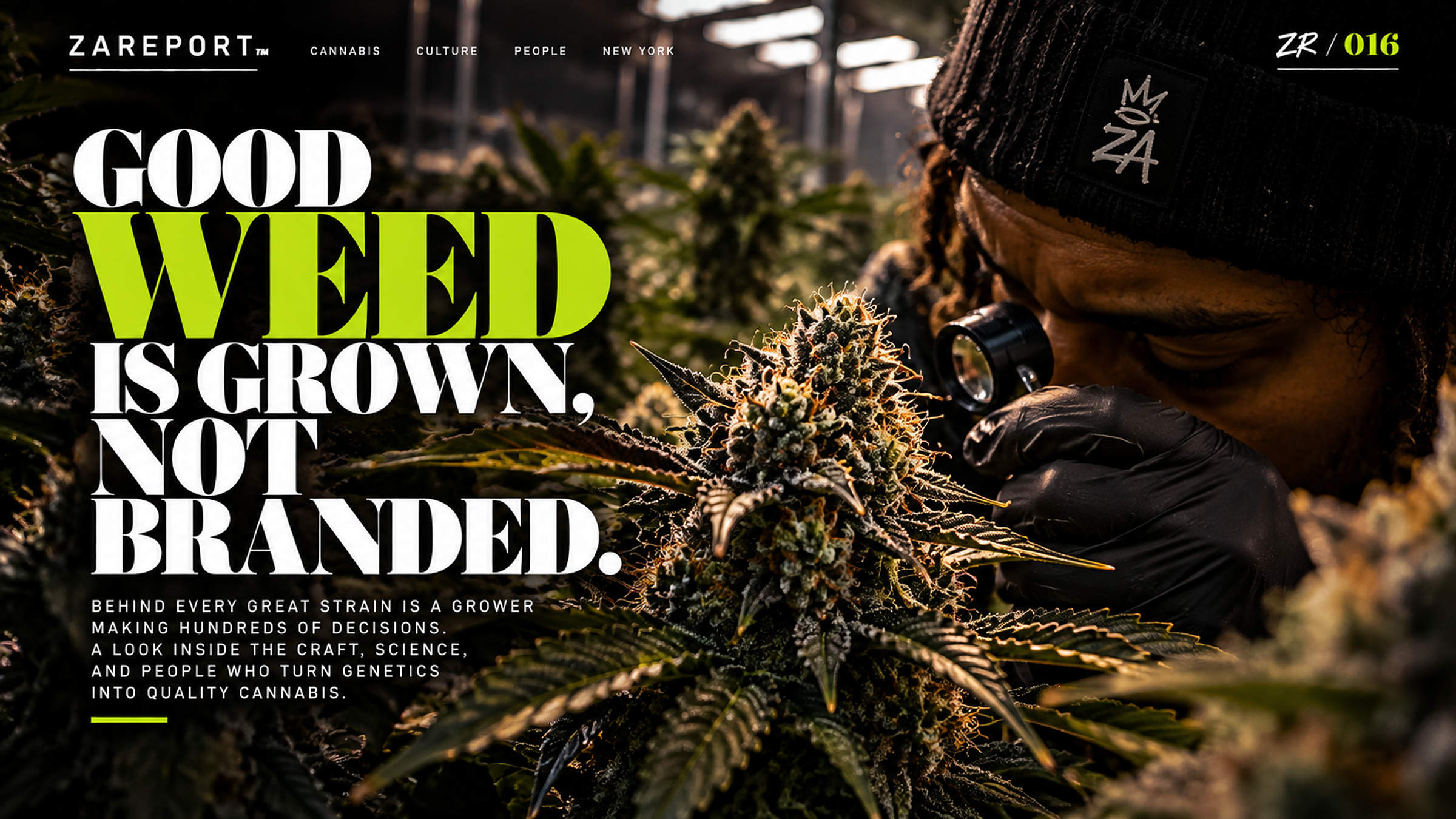
GOOD WEED IS GROWN, NOT BRANDED
Great cannabis isn't manufactured by a marketing department. From genetics and environmental control to drying and curing, the quality of the flower is determined long before it reaches a branded package.
BEFORE THE BRAND, THERE IS THE PLANT
The packaging might be immaculate. The strain name might sound exclusive. The label might carry an impressive THC percentage. But none of those things can rescue poorly grown cannabis.
Good weed starts long before a consumer sees it on a shelf. It begins with genetics, cultivation decisions, environmental conditions, and the patience to let a plant reach its potential. The brand may tell the story. The grower determines much of what that story can honestly promise.
GENETICS SET THE STAGE
Every harvest begins with genetic potential. Different cultivars can express different aromas, structures, cannabinoid profiles, and growth characteristics. But a recognizable strain name is not a guarantee of a consistent experience.
Two plants sold under the same name can differ because of genetic variation, cultivation practices, environmental conditions, and post-harvest handling. A name is a starting point for understanding a product, not proof of its quality.
THE ENVIRONMENT WRITES THE NEXT CHAPTER
Light, temperature, humidity, irrigation, nutrition, airflow, and pest management all influence plant development. Consistency matters, but so does knowing how to respond when conditions change.
More inputs do not automatically produce better flower. Skilled cultivation means understanding the plant, managing stress, and making decisions that support healthy development without compromising safety or quality.
HARVEST IS A DECISION, NOT JUST A DATE
Harvest timing influences the final character of cannabis. Cultivators evaluate plant maturity and other indicators to determine when the crop is ready.
Harvesting too early or too late can affect the expression of a cultivar. There is no single calendar date that guarantees ideal results across every genetic line and growing environment.
THE WORK CONTINUES AFTER THE CUT
Drying, curing, trimming, storage, and transport can preserve or diminish the quality established during cultivation.
Poor handling can damage delicate flower, alter aroma, or introduce quality and safety problems. Thoughtful post-harvest processes help protect the product's characteristics until it reaches the consumer.
The best-looking flower on harvest day is not necessarily the best flower on the shelf weeks later.
THE NUMBERS DON'T TELL THE WHOLE STORY
THC percentage is one measurement, not a complete definition of quality. Aroma, freshness, moisture condition, cleanliness, consistency, and individual preference also matter.
Terpenes contribute to cannabis aroma, but a high terpene percentage alone does not guarantee a particular effect or a superior product. Likewise, visual appeal cannot establish potency or safety.
Laboratory testing provides important information, especially for regulated product safety and cannabinoid content. Still, no single number replaces a broader evaluation of cultivation and handling.
BRANDING HAS A ROLE, BUT IT HAS LIMITS
Good branding can help consumers identify producers, understand product differences, and recognize a company's standards. Strong brands can also create accountability by attaching a reputation to consistent results.
The problem begins when presentation substitutes for substance.
A beautiful jar cannot improve a careless cure. A premium label cannot restore lost freshness. A memorable strain name cannot guarantee the same flower across different growers and harvests.
A brand earns credibility when its product repeatedly supports the promise on the package.
FOLLOW THE FLOWER
The most useful question is not simply which brand has the loudest identity. It is who grew the flower, how it was handled, and whether the quality holds up from one batch to the next.
For consumers, that means paying attention to freshness, verified product information, consistency, and the practices of licensed producers. For cultivators, it means treating quality as a process rather than a marketing claim.
Cannabis culture will always have room for design, storytelling, and memorable brands. But the foundation remains agricultural.
Good weed is grown, not branded.
THE ZA REPORT
Cannabis. Culture. People. The story behind the Za.
Cannabis. Culture. People. The story behind the Za.
RETAIL CONNECTION
Cultivation quality matters beyond the label. Explore New York's licensed cannabis marketplace through House of Za, a founding retail collaborator of The Za Report.
EXPLORE HOUSE OF ZAHouse of Za is a founding retail collaborator of The Za Report. The Za Report is independently owned and operated. Commercial relationships do not determine editorial coverage or opinions.