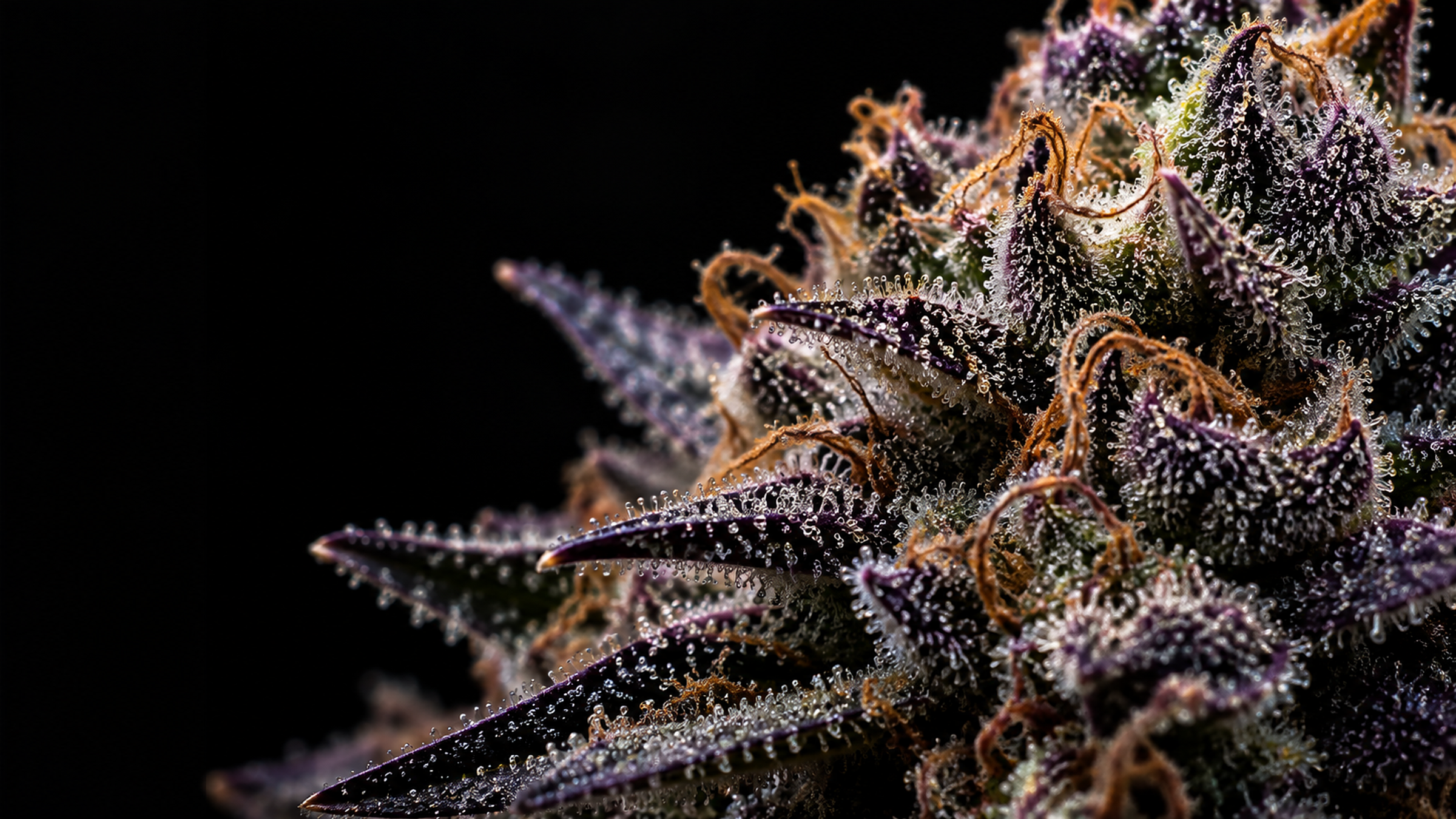
WHAT IS ZA?
From exotic to zaza to a culture of its own.
If you’ve spent any time around modern cannabis culture, you’ve heard the words.
Exotic. Zaza. Za.
Today, “Za” gets used for everything from exceptional flower to expensive flower, rare genetics, colorful buds, hyped brands and, sometimes, simply weed.
But Za didn’t begin as an official cannabis category. There is no Za certification, no minimum THC percentage and no single strain that qualifies.
Za came from culture.
And to understand Za, you have to start with exotic.
Before Za, There Was Exotic
Before people were calling flower Za, they were calling certain cannabis exotic.
Exotic was never a scientific classification either. It was a way of describing cannabis that stood apart from what was commonly available around you.
That distinction could come from genetics, appearance, aroma, cultivation quality or simple scarcity.
And what counted as exotic depended heavily on where you were.
A cultivar that was common in California could feel completely different when it reached a market where consumers had never seen those genetics before.
As cannabis genetics became more recognizable, names began carrying more weight.
Gelato. Zkittlez. Runtz.
Consumers weren't just buying weed anymore. They were beginning to talk about genetics, breeders, flavor, appearance and origin.
The bag mattered.
The nose mattered.
The name mattered.
The culture around the flower mattered too.
“Exotic” became shorthand for something that felt different from ordinary supply.
Exotic Becomes Zaza
Somewhere along the way, exotic became Zaza.
The exact origin of cannabis slang is rarely clean. Words move through neighborhoods, studios, smoke sessions, social media and music long before anyone thinks to document them.
There is, however, a strong public trail connecting the rise of “Zaza” to Atlanta cannabis and hip-hop culture around 2019.
Atlanta rapper Ola Runt was among the artists publicly using and defining the term during that period, including explicitly equating Zaza with exotic weed.
As the word moved through music and social media, the meaning traveled with it.
Exotic became Zaza.
Zaza became Za.
By the early 2020s, the terminology had escaped any single city or scene and entered mainstream cannabis vocabulary.
But as the word became more popular, its meaning also became less precise.
So What Actually Makes Something Za?
That is where things get interesting.
Because Za is not a grade.
There is no governing body certifying flower as Za.
There is no required THC percentage.
There is no approved list of Za genetics.
And a premium price does not automatically make something premium cannabis.
The word is cultural shorthand for cannabis that is supposed to be exceptional.
The problem is that almost anything can be marketed as exceptional.
High THC?
Za.
Purple flower?
Za.
Expensive eighth?
Za.
Flashy packaging?
Za.
Popular genetics?
Za.
But exceptional cannabis is more complicated than any one of those things.
Quality can involve genetics, cultivation, plant health, trichome development, terpene expression, harvest timing, drying, curing, freshness, storage and the skill of the people responsible for every stage between seed and shelf.
A flower testing above 30 percent THC is not automatically exceptional.
A beautiful purple cultivar is not automatically exceptional.
A $60 eighth is not automatically exceptional.
And putting the word “exotic” on a package certainly doesn't make it so.
Real Za should give us something worth talking about.
Look Closer
That idea is important because cannabis culture is entering a different era.
Consumers have access to more information than ever before.
We can ask who bred the genetics.
Who cultivated them.
Where the plant was grown.
What terpenes are present.
How it was harvested.
How it was cured.
How fresh it is.
Who processed it.
Why a particular cultivar smells, tastes or expresses itself differently.
The conversation can go much deeper than a THC number printed on a label.
That is especially important in a regulated market like New York, where legacy cannabis culture, newly licensed cultivators, processors, retailers and emerging brands are now colliding inside the same industry.
There are stories behind these products.
There are people behind them too.
Za Became Bigger Than Flower
At some point, Za stopped describing only cannabis.
It became part of a larger cultural language.
Cannabis intersects with music, fashion, entrepreneurship, genetics, cultivation, design, food, art and regional identity.
Legacy growers are entering regulated markets.
Breeders are becoming recognizable personalities.
Cultivators are building brands.
Consumers are learning about terpenes and genetics.
Solventless extraction has developed its own connoisseur culture.
Products sitting on dispensary shelves may have histories stretching back long before legalization.
And New York is now writing its own chapter.
That makes Za worth documenting beyond whether a particular eighth is “fire.”
The more interesting questions are:
Who made it?
Where did it come from?
Why does it matter?
What makes it different?
And ultimately:
Is It Really Za?
That question is part of why The Za Report exists.
We want to look beyond hype.
Not just what is popular.
Not just what is expensive.
Not just what has the highest THC percentage.
We want to understand the genetics, cultivation, science, people and culture behind the cannabis worth talking about.
That means conversations with cultivators, breeders, processors, retailers, artists, entrepreneurs and the people helping shape cannabis culture.
It means looking at terpenes and genetics.
It means going inside grows.
It means understanding products instead of simply photographing packages.
It means documenting New York's developing cannabis industry while respecting the culture that existed before the regulated market arrived.
And sometimes, it means taking something everyone calls Za and asking a very simple question:
Is it really?
This is The Za Report.
Cannabis. Culture. People.
The story behind the Za.
CULTURE CONNECTION / HOUSE OF ZA
Cannabis language evolves wherever cannabis culture develops. House of Za is an independent licensed cannabis retailer in Buffalo, New York, and a founding retail collaborator of The Za Report, connecting these conversations to New York's emerging legal cannabis market.
EXPLORE HOUSE OF ZAHouse of Za is a founding retail collaborator of The Za Report. The Za Report is independently owned and operated. Commercial relationships do not determine editorial coverage or opinions.