WHO ACTUALLY GREW YOUR WEED?
The brand on the package isn't always the whole story. A look at cultivators, processors, brands and the path New York cannabis takes before reaching a dispensary shelf.
You find a product you like.
You remember the name on the jar.
Next time you walk into a dispensary, you look for that brand again.
Makes sense.
But here's a question most consumers rarely ask:
Who actually grew it?
The answer isn't always the company whose logo is printed largest on the package.
The Brand Isn't Always the Grower
Cannabis reaches the shelf through a chain of businesses and people.
A cultivator may grow the plant.
Another company may process or manufacture the harvested material.
A brand may package and market the finished product.
A distributor may move it through the market.
A dispensary eventually puts it on the shelf.
Sometimes one company performs several of those roles.
Sometimes several different companies are involved.
That distinction matters if you're trying to understand what you're actually buying.
Start With the Cultivator
For flower, cultivation is one of the most important pieces of the story.
The cultivator makes decisions about genetics, environment, plant health, harvest timing and countless other variables that influence the finished product.
If you consistently enjoy flower grown by a particular cultivator, that's useful information.
You may eventually discover that you aren't simply a fan of a strain.
You might be a fan of what a particular grower does with it.
That's a different level of cannabis literacy.
Then Comes Processing
After harvest, cannabis may move into another stage of production.
Depending on the product, processing can mean different things.
For flower, post-harvest handling, drying, trimming, curing and packaging decisions matter.
For products such as concentrates, vapes or edibles, manufacturing becomes an even larger part of the final experience.
The company responsible for that work may or may not be the cultivator.
That's why looking beyond the front of the package can tell you more about how the product came together.
So What Does the Brand Do?
A brand can play many roles.
Some brands cultivate their own cannabis.
Some manufacture their own products.
Some work with outside cultivators or processors.
Some build products from cannabis sourced through partnerships.
Others may focus heavily on selection, product development, packaging, marketing and the relationship with the consumer.
None of those models automatically tells you whether a product is good or bad.
They tell you something different:
What part of the product's journey does this company actually control?
That's a better question.
The Package Leaves Clues
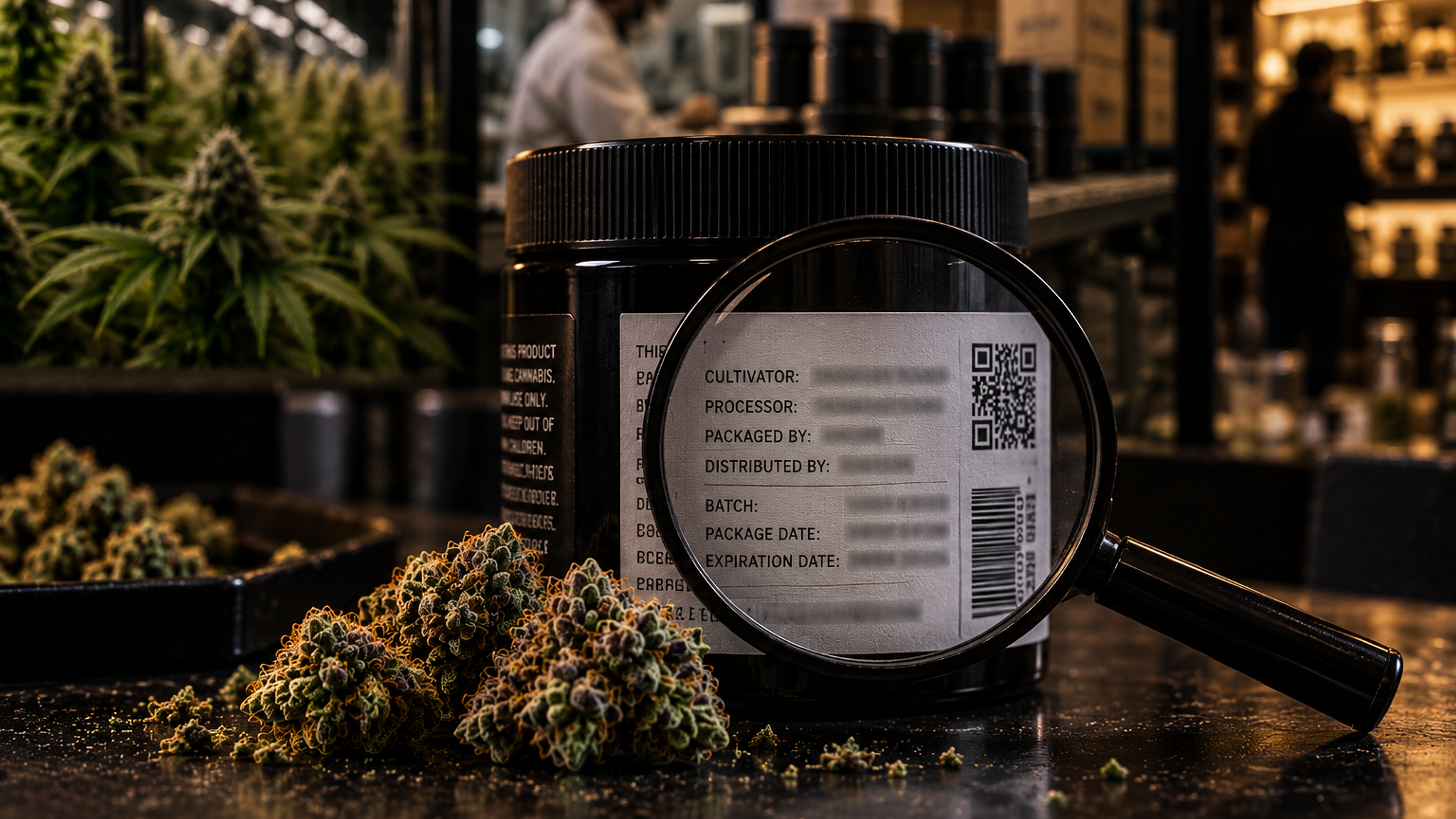
Turn the package around.
Cannabis labels contain more information than the logo on the front.
Depending on the product and jurisdiction, you may find information identifying the cultivator, processor or manufacturer, along with batch or lot information and dates associated with production or packaging.
Those details can help you connect one experience to another.
Maybe you try two different brands and notice that both products trace back to the same cultivator.
Maybe a brand you love changes suppliers and you notice the flower feels different.
Maybe you begin recognizing certain producers before you recognize the brands using their material.
Now you're starting to see the market behind the shelf.
A Product Has a Supply Chain
Think about the path:
Cultivator.
Processor.
Brand.
Distributor.
Dispensary.
Consumer.
The exact chain varies, and some businesses occupy more than one position.
But the important idea is simple.
The jar in your hand didn't appear when the label was printed.
There is a history behind it.
Why This Matters in New York
New York's legal cannabis market is still developing its identity.
New cultivators are establishing reputations.
Processors are developing products.
Brands are trying to differentiate themselves.
Dispensaries are learning what their customers return for.
And consumers are developing a vocabulary for what New York cannabis means to them.
That makes this an especially interesting time to start paying attention to the companies behind the products.
The names that matter five years from now may be businesses consumers are only beginning to recognize today.
Follow the Work
The next time you find flower you really enjoy, don't stop at the strain name.
And don't stop at the logo.
Look at the package.
Find out who cultivated it.
See whether another company processed or packaged it.
Remember the batch.
Pay attention when you encounter those names again.
Over time, patterns begin to emerge.
You stop simply asking:
“What strain is this?”
And start asking:
“Who grew it?”
“Who handled it?”
“Who made it?”
“Where did it come from?”
Those questions bring you closer to understanding the product than branding alone ever could.
Because the brand on the package may introduce you to the cannabis.
But the people behind the package are the ones who brought it there.
Know the source.
This is The Za Report.
Cannabis. Culture. People.
The story behind the Za.
FOLLOW THE SOURCE / HOUSE OF ZA
Understanding cannabis goes beyond the name on the package. House of Za gives Buffalo consumers a place to explore New York cultivators, brands and products while learning more about what they're bringing home.
EXPLORE HOUSE OF ZAHouse of Za is a founding retail collaborator of The Za Report. The Za Report is independently owned and operated. Commercial relationships do not determine editorial coverage or opinions.