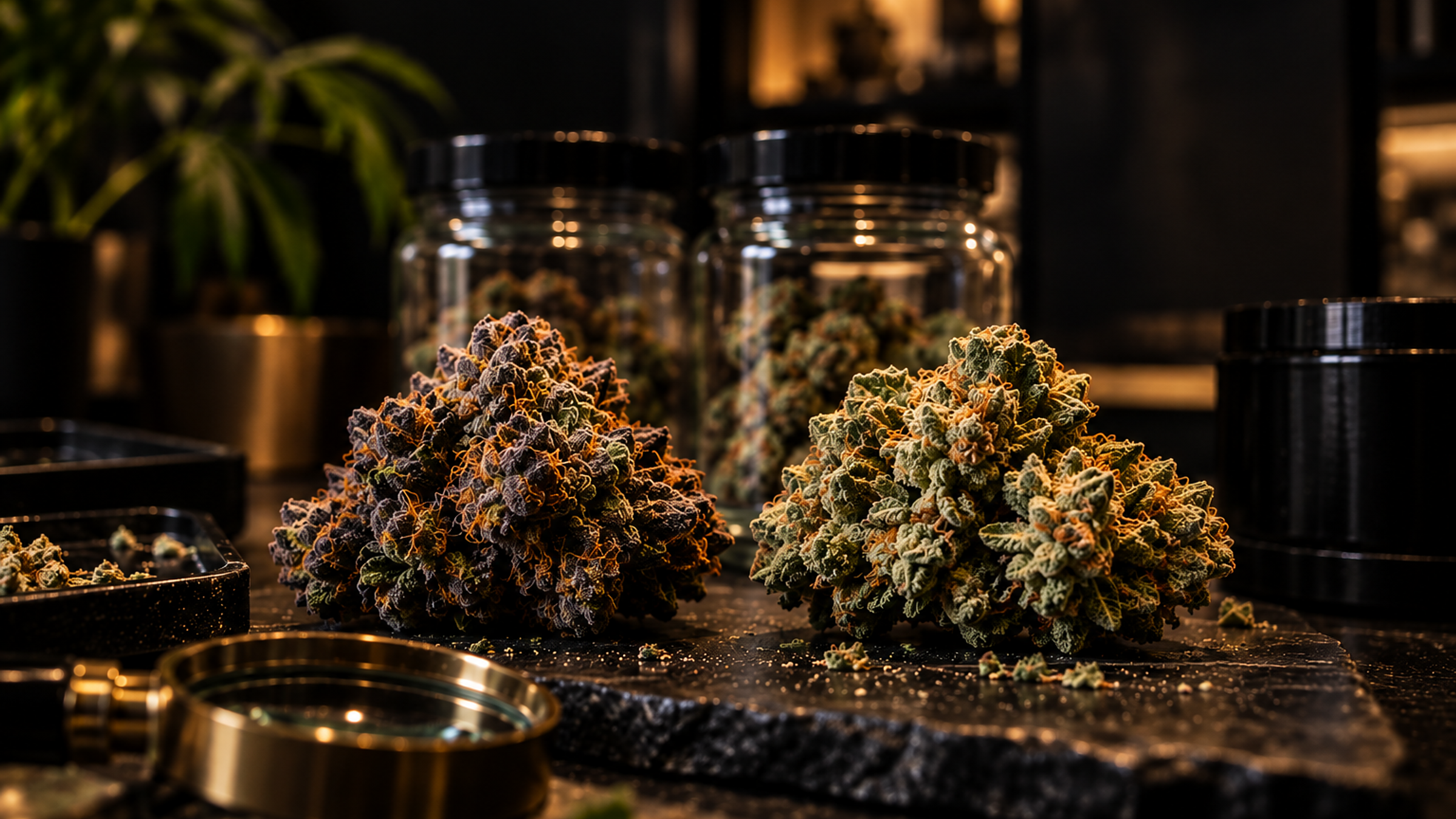
WHY DOES THE SAME STRAIN HIT DIFFERENT?
Same name. Same genetics. Completely different flower. Genetics are only the beginning of what ends up in the jar.
Two jars sit next to each other.
Same strain name. Similar THC numbers. Maybe even similar packaging.
You open the first and get a loud, complex aroma. The flower feels right, looks healthy and leaves an impression.
You open the second and wonder how it could possibly be called the same thing.
It can be.
Because a strain name is only the beginning of the story.
Same Name Doesn't Mean Same Flower
Cannabis isn't manufactured like a bottle of soda.
A familiar name can tell you something about a plant's genetic background, but it doesn't guarantee that every version carrying that name will look, smell or present exactly the same.
The finished flower is the result of genetics interacting with cultivation, environment, harvest decisions and everything that happens afterward.
That's why knowing the strain is useful.
Knowing who grew it, how it was grown and how it was handled can be even more useful.
Genetics Are the Blueprint
Start with genetics.
Think of genetics as a range of possibilities written into the plant.
They influence characteristics such as plant structure, cannabinoid production, aroma compounds, flowering behavior and countless other traits.
But a blueprint isn't a finished building.
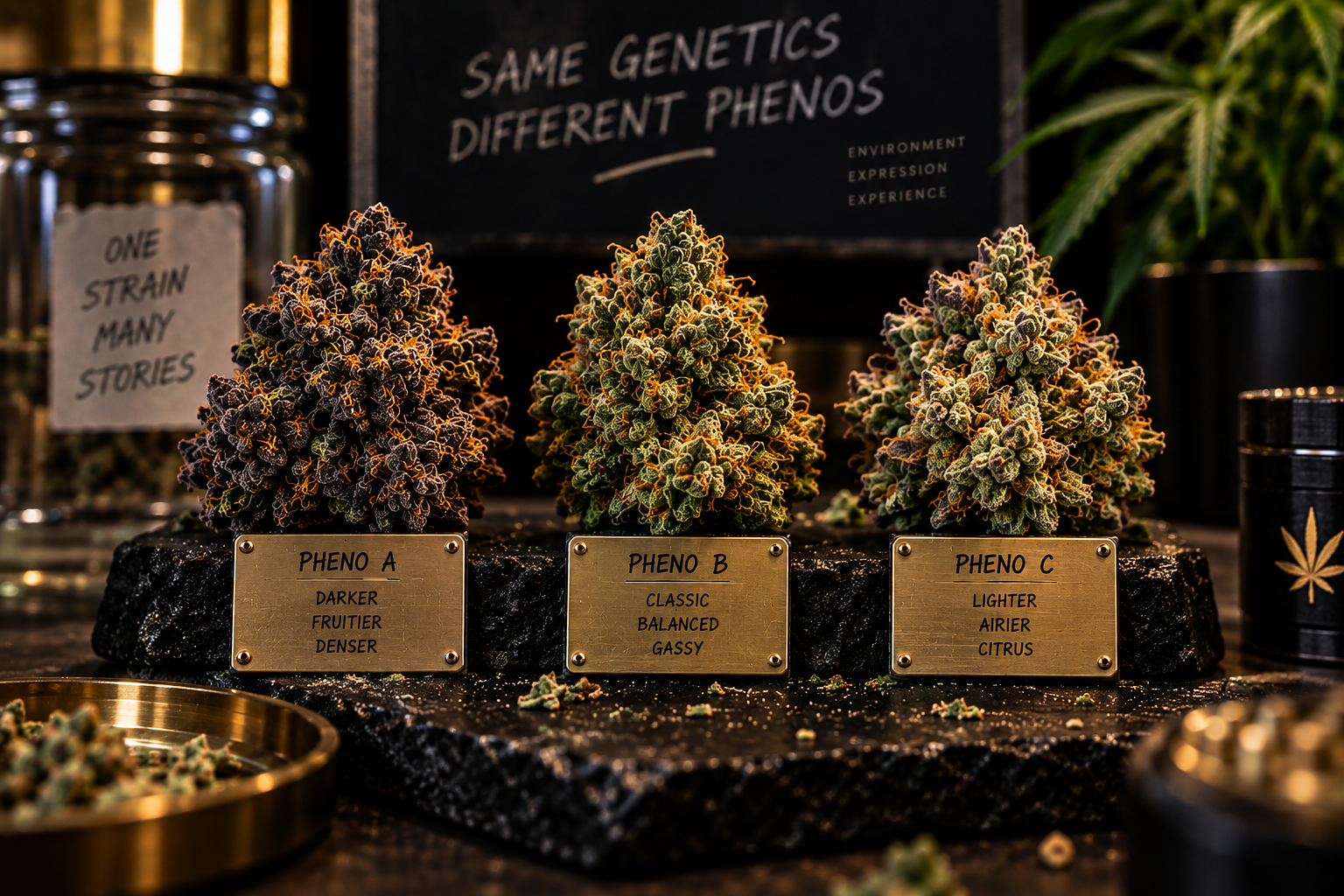
Two plants with related genetics can still express those genetics differently.
That's where phenotype enters the conversation.
Phenotype Creates Variation
A phenotype is essentially the observable expression of a plant's genetics within its environment.
Breeders may grow multiple plants from the same genetic cross and find meaningful differences between them.
One may produce a stronger citrus aroma.
Another may grow with a different structure.
Another may display different coloration, resin production or other characteristics.
Cultivators select plants because of those differences.
So even before two different growers get involved, variation can already exist within a genetic family.
The Grow Changes the Expression
Now put plants into different environments.
Different lights.
Different temperatures and humidity.
Different growing media.
Different nutrition programs.
Different irrigation strategies.
Different levels of stress.
Different cultivation techniques.
Plants respond to their environment. The decisions made during cultivation influence how their genetic potential ultimately expresses itself.
A talented cultivator isn't simply keeping a plant alive.
They're managing an environment around a living organism.
That matters.
The Work Isn't Over at Harvest
Then the plant gets cut.
And another critical phase begins.
Drying and curing can influence moisture, aroma, texture and the overall condition of finished flower.
Move too quickly and quality can suffer.
Handle the flower poorly and months of cultivation work can be diminished after harvest.
A great genetic grown well still has to make it through drying, curing, trimming, packaging and distribution before it reaches you.
Every step matters.
Then the Jar Starts Aging
Cannabis doesn't stop changing once it's packaged.
Time, temperature, light, oxygen, moisture and storage conditions continue affecting flower.
That means two packages originating from similar material can present differently depending on what happened between packaging and purchase.
Look at dates.
Pay attention to storage.
And when possible, learn how quickly products are moving through the retailer.
Freshness isn't the only measure of quality, but context matters.
So Where Does the Strain Name Fit?
The strain name still matters.
It gives you a reference point.
It can help you recognize genetic families, compare previous experiences and begin understanding what characteristics you tend to prefer.
The mistake is treating the name as a guarantee.
“Gelato” isn't one universally identical object.
Neither is OG Kush, Sour Diesel, Blue Dream or any other famous cultivar.
The name starts the conversation.
It doesn't finish it.
Look Beyond the Name
When you're evaluating flower, build a bigger picture.
Who cultivated it?
What genetics or lineage are listed?
What does it smell like?
How does the flower look and feel?
When was it harvested or packaged?
How has it been stored?
Have you tried another batch from this cultivator before?
Over time, you may discover that the name on the package matters less than the combination of genetics, producer and execution behind it.
That's cannabis literacy.
Not memorizing which strain is supposedly “the strongest.”
Learning how to recognize context.
Same Cultivar. Different Journey.
Cannabis is agricultural.
It's genetic.
It's environmental.
And it's handled by people at every stage between seed and shelf.
Variation isn't necessarily evidence that something went wrong.
It's part of understanding the plant.
So the next time two versions of the “same strain” seem completely different, don't immediately assume one of them isn't real.
Look closer.
Ask who grew it.
Look at the batch.
Smell the flower.
Learn the story behind what's actually in the jar.
Because a strain name tells you where the story started.
It doesn't tell you how the story ended.
This is The Za Report.
Cannabis. Culture. People.
The story behind the Za.
LOOK BEYOND THE LABEL / HOUSE OF ZA
A strain name is only one piece of the story. House of Za connects Buffalo consumers with New York cannabis from different cultivators, genetics and production styles, giving customers an opportunity to explore what makes each expression different.
EXPLORE HOUSE OF ZAHouse of Za is a founding retail collaborator of The Za Report. The Za Report is independently owned and operated. Commercial relationships do not determine editorial coverage or opinions.